Tables of Contents
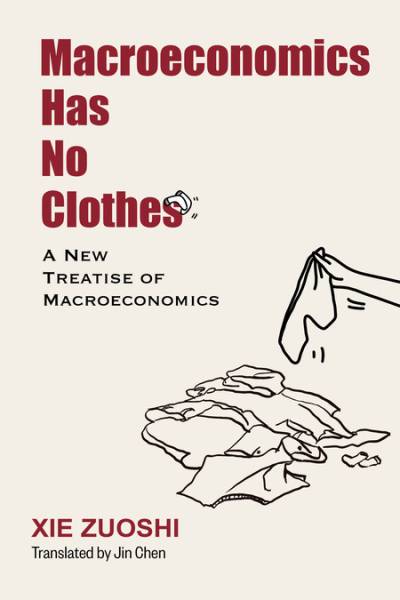
— Macroeconomics Has No Clothes
Foreword
A Fresh Eye On Economics, Guided By Innate Curiosity
Preface
When First Principles Fail
Contents
Chapter 1. National Income Accounting
1.1 Why Measure Total Output by Value
1.2 The Strict Definition of GDP and Its Measurement
1.3 Be Wary of Pseudo-GDP
1.4 Debunking the Broken Window Fallacy
1.5 A Wrong But Enlightening Way to Explain Price Index
1.6 GDP Deflator and Real GDP
1.7 Better Rich Than Not: Defending GDP Pursuit
Chapter 2. Money Theory
2.1 The Origin of Money
2.2 The Functions of Money
2.3 Free-market Money Triumphs Over Fiat Money
2.4 Does Marginal Utility of Money Diminish
2.5 Will Bitcoin Become Money
2.6 Creation and Endogeneity of Money
2.7 Is the Quantity Theory of Money Still Valid
2.8 Cantillon Effect and Real Balance Effect
Chapter 3. Economic Cycle: Keynesianism
3.1 Keynes’ Unemployment and Fluctuation
3.2 Multiplier Effect: Keynes’ “Marvelous” Logic
3.3 The Monetary Policy Keynes Overlooked
3.4 Misapplication of the Three Psychological Laws
3.5 A Wealthier Government Harms the Economy
3.6 Can Perfect Counterfeit Money Stimulate Economy 100
3.7 Keynesian Economics is Flawed Even in Short-Run
Chapter 4. Inflation
5.1 Inflation Solely Driven by Monetary Expansion
5.2 Can Currency Appreciation Curb Inflation
5.3 The Harms of Inflation
5.4 Inflation Mismeasurement and Its Consequences
5.5 How Does Individual Measure Inflation
5.6 Taking Sides: Inflation or Deflation
5.7 Interest Rates: Nominal, Real, and Time Value
Chapter 5. Economic Cycle: Supply-Side Perspectives
4.1 Demand: Seeing Supply Beyond Money
4.2 Supply-side Perspective: Multiplier Effect Revisit
4.3 Supply-side Perspective: Why Economy Fluctuates
4.4 Has the State Ironed Out Economic Cycles
4.5 The Logic Behind Unemployment
4.6 Govenment Intervention: Source of Economic Crises 133
4.7 No Model of Supply and Demand in Macroeconomics
4.8 Microeconomics Shapes the Macro
Chapter 6. Broader Monetary Considerations
6.1 Excessive Money Supply: From Rate Hike to Credit Crunch
6.2 Policy U-Turn: From Easing to Rate Surge
6.3 MMT: When Phenomenon Masquerades as Theory
6.4 Is Fiat Currency a Central Bank Liability
6.5 Why Fiat Currency Requires Monetary Policy
6.6 Do Not Dance to the Tune of Macroeconomic policies
6.7 Not a Market Failure: the Wenzhou Crisis
Chapter 7. Growth and Distribution
7.1 Market and Growth
7.2 Freedom and Growth
7.3 More Wealth, Faster Growth
7.4 Only Investment Drives Economic Growth
7.5 Economic Growth is Easy
7.6 Economic Growth Hinges on Luck Too
7.7 The Logic of China’s Economic Growth
7.8 Growing Income Gap: Repercussion of Market Distortions
7.9 Beyond Equality: Measuring Fairness Through Consumption
Chapter 8. Open Economy
8.1 Comparative Advantage
8.2 What Determines Exchange Rates
8.3 What Determines the Trade Balance
8.4 The Optimal Tariff is Zero
8.5 Why Trade Protectionism Persists
8.6 Terms of Trade Is a Useless Term
8.7 Sound Economics Rejects the Impossible Trinity
Chapter 9. Exchange Rates: A Unique Price
9.1 Do Not Intervene in Prices
9.2 Should We Intervene in Exchange Rates
9.3 The Core Issue of Exchange Rates
9.4 Exchange Rate Regimes and the Spillover
9.5 Exchange Rate, Terms of Trade and Gains from Trade
9.6 Fixed Exchange Rate Is a Monetary Discipline
9.7 Addressing Economies Diverging from Classical Assumptions
Bibliography
List of Figures
List of Tables